Through the memories of Jack White, Lois Taylor and Ena Stanley
“IT WAS ALL THE VICAR’S FAULT”
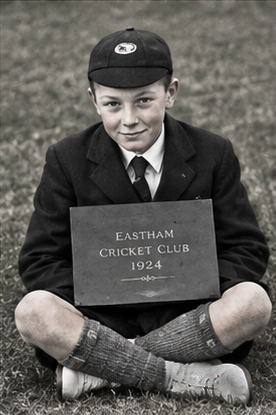
Jack White – circa 1950
“It was all the Vicar’s fault” Jack White concluded when he came to write his memories of Eastham cricket.
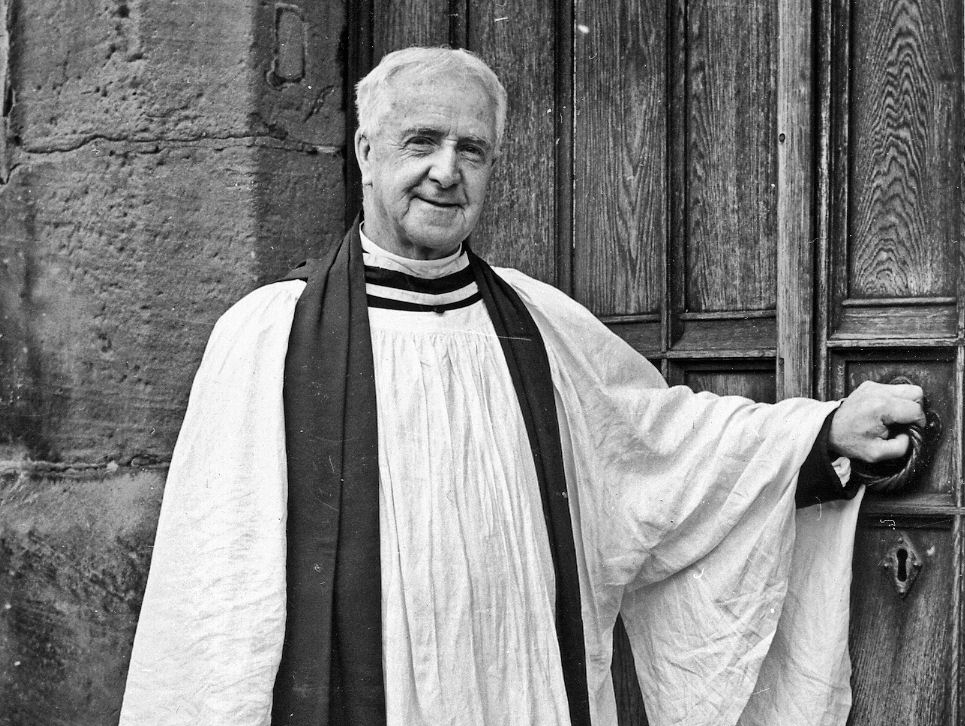
The Rev. J. Wright-Davies was the Vicar Jack was referring to. He had succeeded the retired Canon Torr in 1918 and was a double Cambridge Blue in cricket and rugby. Coincidentally, Douglas Vernon before him had also been a double Cambridge Blue.
The Recreation Ground Jack Remembered
Jack remembers playing on the Recreation Ground “across the road from Torr Park”. His memory is important evidence that, whatever the legal position following the 1920 notice, cricket and other sport continued on the Recreation Ground for some time afterwards.
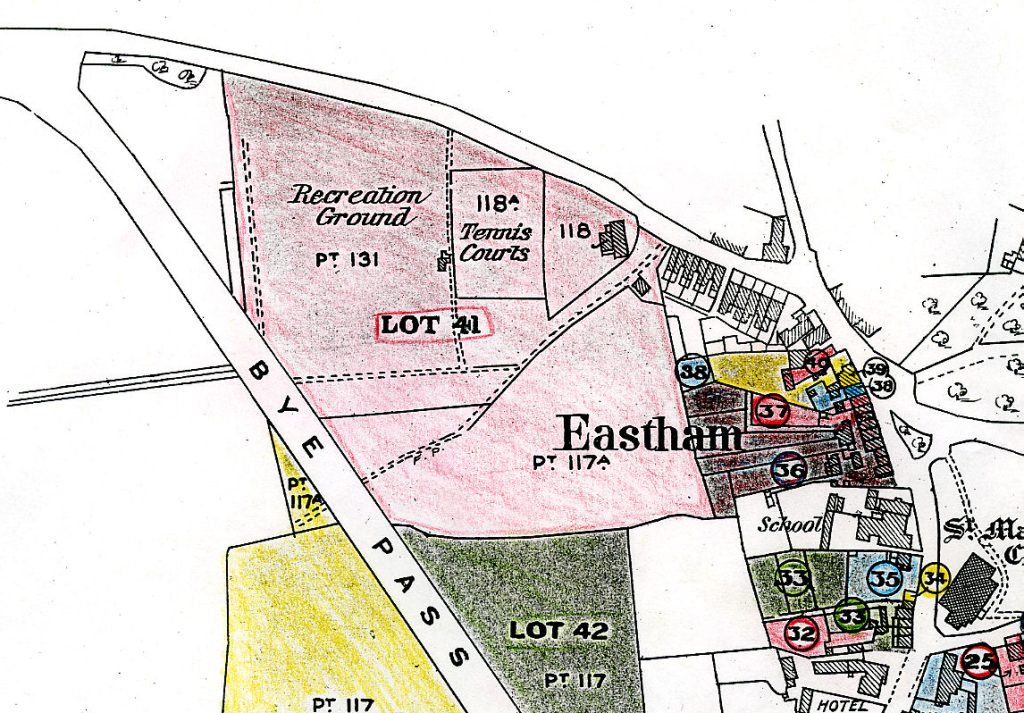
He recalls “two tennis courts and a bowling green about to be turned into tennis courts”. If Jack’s chronology is correct, this raises an intriguing question: why was money still being spent on sporting facilities when the future of the Recreation Ground was already uncertain?
He reminds us that the Cricket Field on The Rec became the Football Pitch for the village team in the winter. He also recalls:
“There were two wooden huts on either side of the ground, one was used as the Cricket Pavilion. At the entrance to The Rec from the Village Road stood a tin meeting hut called The Shanty. The visiting team used to change here before the tea ladies took over.”
These huts can be clearly seen on the plan that accompanied the sale document.
The ‘Gentry’ and the Village Players
Jack’s memories also provide a fascinating glimpse of the English class system at work in village cricket. Without any trace of resentment, Jack invites us to “remember that the Cricket Club was run by ‘The Gentry’. These were led by the Vernon family from Eastham House. Sir Norman Vernon in 1st XI, H.B. Vernon and J.S. Vernon in the 2nd XI.”
At that time the 1st XI was captained by the Rev J Wright-Davies and the 2nd XI by Mr E.C. Tunnicliffe who, Jack says, looked a bit like W.G. Grace. It was Tunnicliffe who provided an end of season fixture against an Eastham House side.
Jack reminds us that the Vernons were millers and the Ravenscrofts, who lived in Plymyard House, represented the cotton industry. He goes on “Both these families brought a number of good players to the club”.
Jack believed that “the 1st XI was probably the best non-competition side on Merseyside with a number of local players from the village”. These included J Dornat, W. Southwood, A Scott, J. Kirkham and, as Jack proudly added, “when I left school, J. White!”
Jack also remembered changes to the ground after 1924: “Not long after 1924 the football club was relegated to a field alongside the Rec and the cricket ground was improved.”
The improvement of the cricket ground may also explain another of Jack’s recollections:
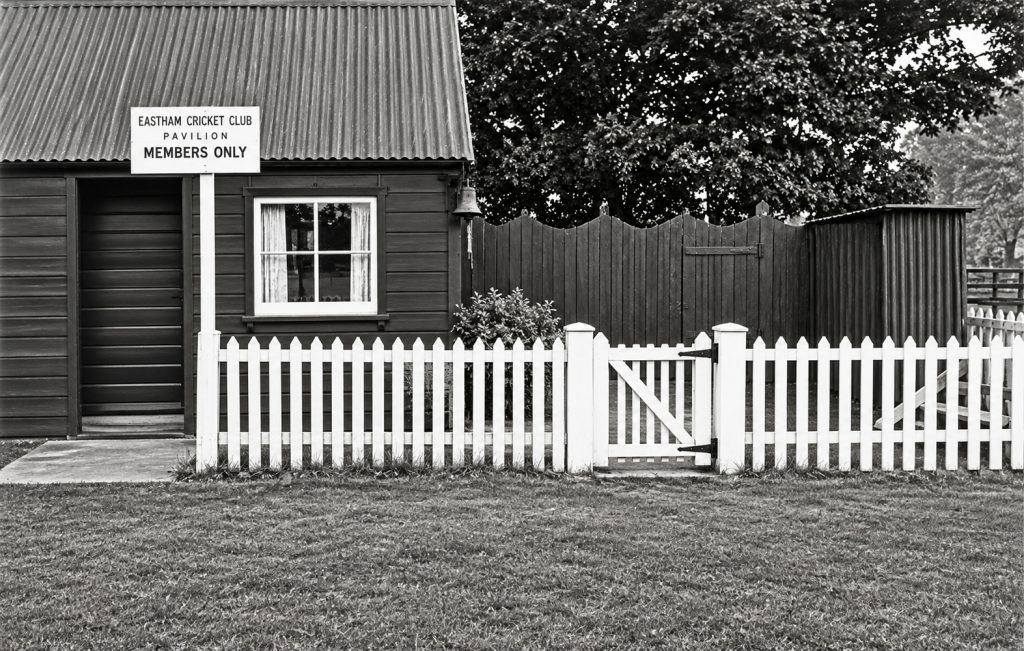
“One of the sheds was improved and white railings erected around it.”
Was this the cricket pavilion?
The Pony — or Donkey — Everyone Remembered
He goes on, “We had a groundsman whose mower was pulled by a small pony and the young children used to ride on its back”.
This detail was also recalled by Lois Taylor but she remembers slightly differently that,
“We had wonderful times on the old Recreation Ground, and there was an old brown donkey living there who was a great favourite with us children”.
Animals were not the only colourful characters Lois remembered. There was also the cricketing curate…
“One Curate had to be brought from the cricket field to take a funeral that he had forgotten all about (being an ardent cricketer) and he donned his cassock and surplice over his white flannels!”
The Cricket Jack Remembered
Jack’s memories were not simply of the ground and the people. He remembered the cricket itself — and some remarkable matches.
“We had a very good fixture list including some weekend matches over two nights with Oxton, Birkenhead Park, Liverpool and Neston. The Saturday fixture included Upton (Birkenhead), Odyssey, Bromborough Pool, Port Sunlight, Eaton Hall (Chester), and Birkenhead St Marys. The Eaton Hall fixture was very special as it took place on the Duke of Westminster’s ground. Quite often he would have a number of weekend guests who were usually very good cricketers”.
Two games stuck in Jack’s mind, one over two evenings away against Oxton and the other away to Birkenhead Park. This is Jack’s view of those memorable games :
A MATCH JACK NEVER FORGOT
DROPPED ON 0 – SCORED 300
“The first game at Oxton against their First XI . The first night they batted and their star batsman, J.L. Graham, opened the innings. He was dropped by (the skipper) Jimmy Kirkham before he’d scored. He went on to slog over 300. I was the unlucky bowler!”
OXTON V EASTHAM
This is the second game that Jack couldn’t forget
ANOTHER MATCH THAT JACK REMEMBERED
“HE WANTED TO MAKE A GAME OF IT”
“Another away match at Birkenhead Park. I had their first five batsman out very quickly but was then taken off by J.K. (Jimmy Kirkham) and Park made a lot of runs. Park captain asked J.K. why he had taken me off, the answer was that he wanted to make a game of it!”
BIRKENHEAD PARK V EASTHAM
The Players Jack Remembered
Jack ended his account with a roll-call of the men he remembered playing with and against. His brief descriptions sometimes tell us more about them than any scorecard could.
Rev.J. Wright-Davies.
A fine all-rounder and a good coach.
Sir Norman Vernon.
Not a good player but he held the purse strings of the club.
T. Dorward.
Son of the local coalman. A very good opening bat who had a trial at Old Trafford.
W. Southwood
I think the best leg break bowler I have ever seen, could bat as well. Another village boy and son of the chief pilot on the Manchester Ship Canal
W. Philips.
the church organist, a steady change bowler.
G. Pritchard
A Bromborough boy, a very fast opening bowler.
A Whitley
His father stood outside The Adelphi Hotel, Liverpool and made enough money to send his son to public school.
E.C. Tunnicliffe
Captain of the 2nd XI.
H.B. Vernon
Became 2nd XI captain. Has a First World War wound in one hand but was a good cricketer
J.S. Vernon
The youngest son who made up the XI.
J. Kirkham
A local man who loved his cricket.
A. Scott
Another local man who opened the 2nd XI Bowling.
R.L. Ravenscroft
A very good batsman.
Harry Williams
The local plumber who umpired.
M Hodgson
Another umpire
Jack concluded his memories by recalling that the construction of the Eastham By-pass “took quite a piece of ground from us”. His date was wrong — Jack remembered this happening in the mid-1930s, whereas the Eastham bypass had opened in 1922. But the substance of his memory is important: part of the Recreation Ground was indeed lost to the new road.
It is another reminder of how the Recreation Ground was gradually being changed — and perhaps helps explain why its sporting future became increasingly uncertain.
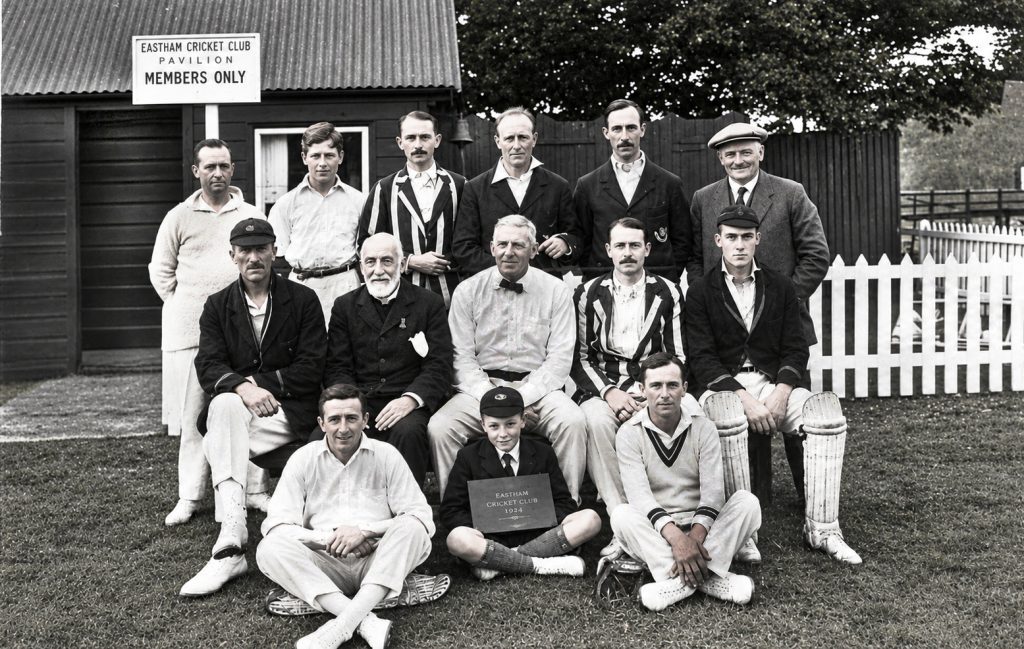
By the time Eastham Cricket Club disappeared in 1937, Jack White had travelled a remarkable distance with it. He had begun as an eleven-year-old scorer in 1924 and grown into one of its players.
Years later, he became something equally valuable — its historian.
Jack White was not the only villager to remember these years. Ena Stanley’s memories show just how deeply cricket had become woven into Eastham family life. She writes
“The Cricket Club’s 1st and 2nd teams became very popular. My brother Bill and Jim Dorward, my cousin, were in the 2nd team when quite young and were good players. They were transferred to the 1st team when only 16 years old. The Reverend John Wright Davies was a keen cricketer and played each week, also Doctor Leslie Garson, Humphrey and Stafford Vernon, Sir Herbert Vernon’s two sons and Jimmy Home, who lived opposite the Hooton Arms”.
A REMARKABLE ACHIEVEMENT
100 WICKETS AT JUST 16
“When my brother was sixteen, he took over one hundred wickets in matches against Oxton, Aigburth etc. and was acclaimed a first class bowler. He was presented with a small case at the Annual Dinner at Eastham Ferry Hotel. My grandfather Parr who was Cricket Umpire, gave him a cricket bat. My uncle James Dorward was the wicket keeper, so quite a number of my family were connected with the Eastham Cricket Team”.
BILL DORWARD
Through Jack, Lois Taylor and Ena Stanley, the old Recreation Ground comes briefly back to life: the wooden pavilion and the Shanty; white railings around the ground; the groundsman’s pony — or perhaps a brown donkey — carrying delighted children; the Curate hurrying from the cricket field to conduct a forgotten funeral; the Vernons and the village players turning out together on a Saturday afternoon.
And, above all, the cricket.
These are no longer names in a scorebook or lines in a newspaper. They are people who were there.
For the first time in our story, Eastham cricket has passed from the historical record into living memory.
Explore the Story
Follow the story from the beginning — or jump straight to another period.